
Can You Install an Inter-tenancy Party Wall System Yourself?
An inter-tenancy party wall system is not the same as a standard internal wall. It is a performance-based wall assembly designed to separate adjoining dwellings and deliver three critical outcomes: acoustic privacy, fire resistance and thermal efficiency.
For this reason, a DIY approach is only suitable for limited preparation work, basic understanding, or small non-compliance-related tasks. The full installation of an inter-tenancy party wall system should be carried out by qualified builders, installers, or contractors who understand Australian construction requirements, NCC compliance, fire-rated wall assemblies and acoustic detailing.
The Helix AAC Inter-tenancy Party Wall System is designed for modern residential and multi-residential construction where speed, performance and compliance matter. Using autoclaved aerated concrete panels, the system provides a lightweight, durable and high-performance alternative to traditional masonry party walls.
What Is an Inter-tenancy Party Wall System?
An inter-tenancy party wall system is a separating wall built between two adjoining dwellings, townhouses, apartments, units, or attached residential buildings. Its purpose is to create a safe and comfortable separation between occupants while helping the building meet fire, acoustic and energy performance requirements.
In practical terms, this wall must do more than divide two spaces. It must help reduce sound transfer, provide fire separation, support compliant construction detailing and maintain long-term durability.
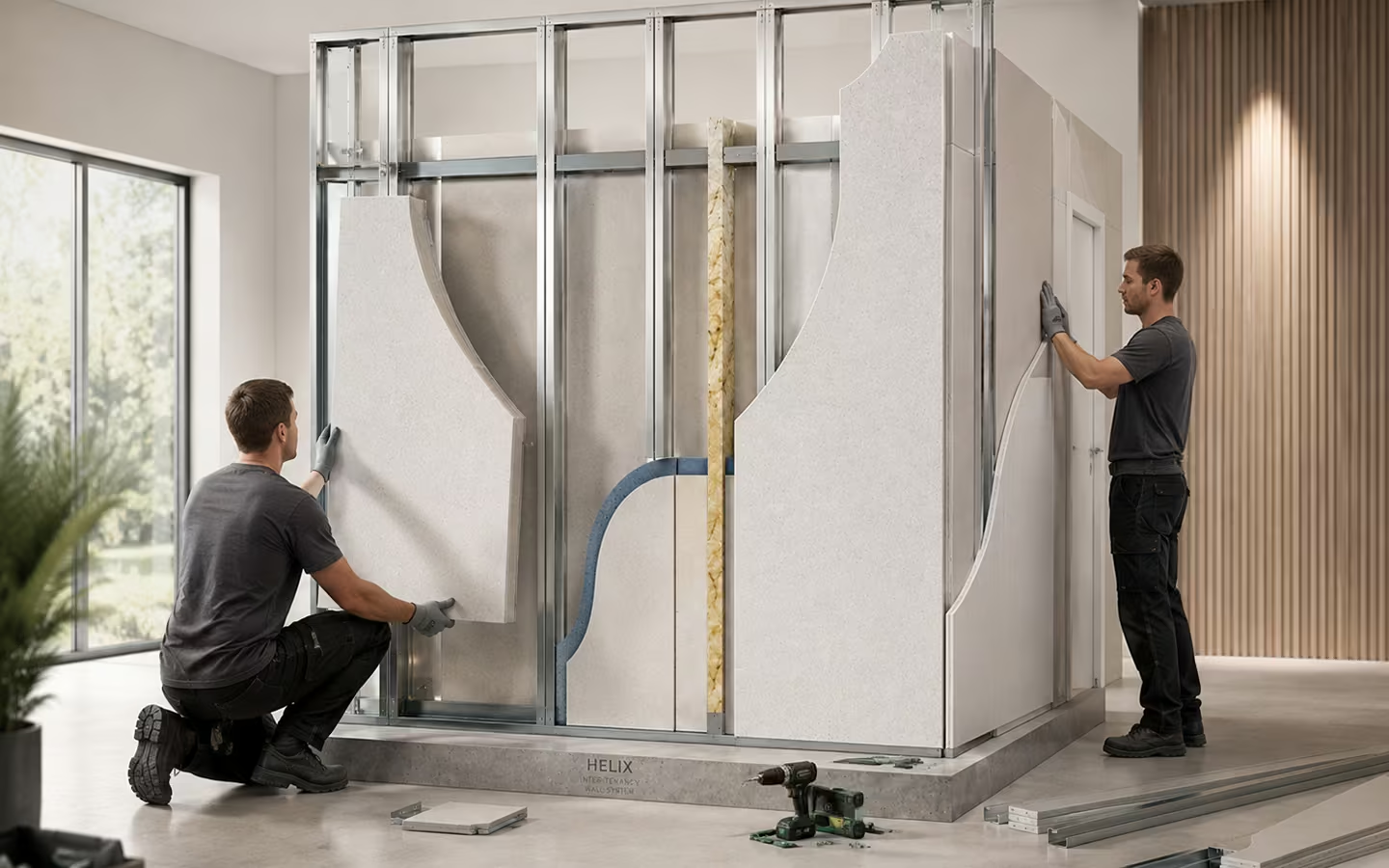
The Helix AAC system uses reinforced AAC panels in 50mm and 75mm thicknesses, installed with timber or steel framing depending on the project requirements. The panels are lightweight, easy to handle compared with traditional masonry, and designed to speed up installation on residential and commercial projects.
Is an AAC Party Wall System Good for DIY Builders?
AAC panels are easier to cut, shape and handle than many traditional masonry materials. This makes them attractive to builders, owner-builders and renovators who want a faster and cleaner wall system.
However, inter-tenancy and party walls are compliance-critical building elements. The wall must be installed as a complete tested system, not as a collection of individual materials. The final performance depends on the correct panel thickness, plasterboard type, stud framing, insulation, cavity gap, fixings, sealants, junctions and penetrations.
A small installation mistake can reduce fire performance, weaken acoustic separation, or create compliance issues during inspection.
So, while AAC panels may look DIY-friendly, the party wall system itself should be treated as a professional construction system.
Why DIY Installation Can Be Risky
A party wall is one of the most important walls in a multi-residential building. Unlike a decorative wall or simple partition, it must perform under real fire, sound and structural conditions.
DIY installation may create problems such as:
- Incorrect cavity gaps between wall leaves
- Wrong plasterboard or insulation specification
- Poor sealing around services and penetrations
- Incorrect fixing methods
- Loss of acoustic performance
- Reduced fire resistance
- Non-compliant wall junctions
- Inspection or certification issues
- Future defects between adjoining homes
For a standard renovation, these problems may be inconvenient. For an inter-tenancy wall, they can affect safety, privacy, building approval and long-term asset value.
What Makes the Helix AAC Inter-tenancy Party Wall System Different?
The Helix AAC Inter-tenancy Party Wall System is built around autoclaved aerated concrete, a lightweight masonry material known for strong fire, acoustic and thermal performance.
AAC panels are suitable for modern construction because they reduce structural load while still providing solid wall performance. One AAC panel can replace many standard bricks, which helps reduce installation time and labour requirements on site.
The Helix system is designed for separate residential buildings and multi-family construction where builders need a practical balance between speed, compliance and performance.
Key advantages include:
- Strong acoustic separation for better privacy between dwellings
- Fire-rated wall performance for safer residential construction
- Lightweight panels that reduce structural load
- Faster installation compared with traditional masonry
- Compatibility with timber and steel framing
- Thermal mass benefits that help reduce temperature fluctuations
- Clean system detailing for residential and commercial projects
50mm or 75mm AAC Panels: Which One Should You Use?
Helix inter-tenancy and party wall systems are available with 50mm and 75mm AAC panel options. The correct choice depends on the project design, wall assembly, framing type, fire rating, acoustic requirements and the approved construction documentation.
A 50mm AAC panel can be suitable for specific party wall configurations where the complete wall system has been designed and specified correctly. A 75mm AAC panel may be used where the wall assembly requires additional mass, performance, or a specific system variant.
The important point is that panel thickness should never be selected by guesswork. It should be selected according to the approved wall system, project requirements and technical documentation.
What Parts of the Process Can Be DIY?
A homeowner, developer, or owner-builder can still be involved in the early stages of the project. DIY involvement may be suitable for planning, coordination and preparation, but not for replacing professional installation.
You may be able to:
Research AAC party wall systems
Compare 50mm and 75mm AAC panel options
Review design and installation guides
Prepare questions for your builder or architect
Coordinate product selection with the project team
Check that the selected wall system matches the required fire and acoustic performance
Plan finishes and internal layouts around the wall system
The installation itself should be handled by experienced professionals who understand party wall compliance and system-based construction.
Professional Installation Matters
The performance of an inter-tenancy wall depends on the complete wall build-up. Plasterboard, framing, insulation, AAC panels, cavity spacing and sealants all work together as one system.
For example, changing the plasterboard type, reducing the cavity, using the wrong insulation, or failing to seal joints correctly can affect the wall’s acoustic and fire performance.
This is why professional installation is not just about workmanship. It is about protecting the tested performance of the system.
Best Use Cases for Helix AAC Party Wall Systems
The Helix AAC Inter-tenancy Party Wall System is suitable for a wide range of building types, especially where fire safety, acoustic comfort and faster construction are priorities.
Typical applications include:
Townhouses
Duplex developments
Apartments
Multi-residential buildings
Attached residential dwellings
Low-rise residential projects
Commercial buildings requiring separating wall performance
For developers and builders, the system can help reduce construction time while maintaining a strong focus on compliance and occupant comfort.
Benefits for Homeowners and Residents
A good party wall should not only meet code requirements. It should improve the everyday living experience.
For homeowners and residents, a high-performance AAC party wall system can help create quieter, safer and more energy-efficient homes. Better acoustic separation means less noise transfer from neighbouring dwellings. Fire-rated construction improves safety between attached homes. Thermal mass can also support better indoor comfort by reducing temperature fluctuations.
This makes the wall system important not only during construction, but throughout the life of the building.
Benefits for Builders and Developers
For builders and developers, Helix AAC panels offer practical construction advantages. The panels are lightweight, easier to handle than traditional masonry, and can be cut and shaped on site with standard tools. This can help reduce labour time, simplify handling and improve construction efficiency.
Because AAC panels are system-based, they also provide a clear path for specifying wall performance across residential and multi-residential projects.
The result is a faster, cleaner and more reliable way to build inter-tenancy walls compared with heavy traditional wall systems.
Final Answer: Should You DIY an Inter-tenancy Party Wall System?
No — a complete inter-tenancy party wall system should not be treated as a simple DIY project.
While AAC panels are lightweight and easier to work with than traditional masonry, the wall itself is a fire-rated, acoustic and compliance-critical building system. The safest and most reliable approach is to use qualified professionals and follow the approved Helix design and installation documentation.
A DIY approach may help you understand the product, plan the project and prepare questions for your builder, but the final installation should be completed by experienced trades who can protect the fire, acoustic and thermal performance of the system.
For projects that require faster installation, strong acoustic separation, fire-rated performance and NCC-aligned construction, the Helix AAC Inter-tenancy Party Wall System provides a practical and high-performance solution for modern Australian buildings.